How an SEO Prioritization Tool Can Focus Your Optimization Efforts
I have been doing SEO long enough to remember when a simple spreadsheet and a gut feeling were enough to guide your next move. Those days are gone. Now you have Google Search Console feeding you hundreds of queries, Ahrefs and SEMrush showing you thousands of keyword ideas, and Screaming Frog screaming about broken links on your site. The sheer volume of data can paralyze you. You know you should fix your page speed, improve your backlink profile, and maybe add some structured data, but where do you start?
That is where an SEO prioritization tool changes the game. Not by adding more data, but by helping you decide what to act on first. I have worked with teams that spent months polishing a page that had no search volume while ignoring a simple canonical tag error that was killing their rankings. A good prioritization tool forces you to look at the intersection of impact and effort. It turns a mountain of noise into a short list of tasks that actually move the needle.
Why Prioritization Matters More Than Discovery
Most SEOs are great at discovery. You can run a content gap analysis in SEMrush and find fifty topics your competitors rank for that you do not. You can export every query from Google Search Console and spot a dozen pages with high impressions but low click-through rate. You can crawl your site with Screaming Frog and find missing meta descriptions, duplicate titles, and broken images. But discovery without prioritization is just a longer to-do list.
I once consulted for a mid-size e-commerce site where the marketing team had a Trello board with over 200 SEO tasks. They were adding five new cards every week and closing maybe one. The problem was not that they did not know what to fix. They knew everything. They just could not decide which fix would give them the most traffic for the least work. An SEO prioritization tool helped them rank tasks by estimated traffic gain, difficulty, and resource cost. Within a month they had closed ten high-impact items, including fixing a misconfigured robots.txt that was blocking Googlebot from key product pages.
What a Good Prioritization Tool Should Do
Not every tool that calls itself an SEO prioritization tool is worth your time. From what I have seen, the useful ones share a few traits. First, they combine multiple data sources. Pulling keyword difficulty from Moz, search volume from Ahrefs, and your own click-through rate from Google Analytics gives you a more complete picture than any single metric. Second, they let you weight factors. Maybe for your site, backlink profile strength matters more than page speed. A good tool lets you adjust that. Third, they produce a clear, ranked list of actions, not just a scatter plot you have to interpret yourself.
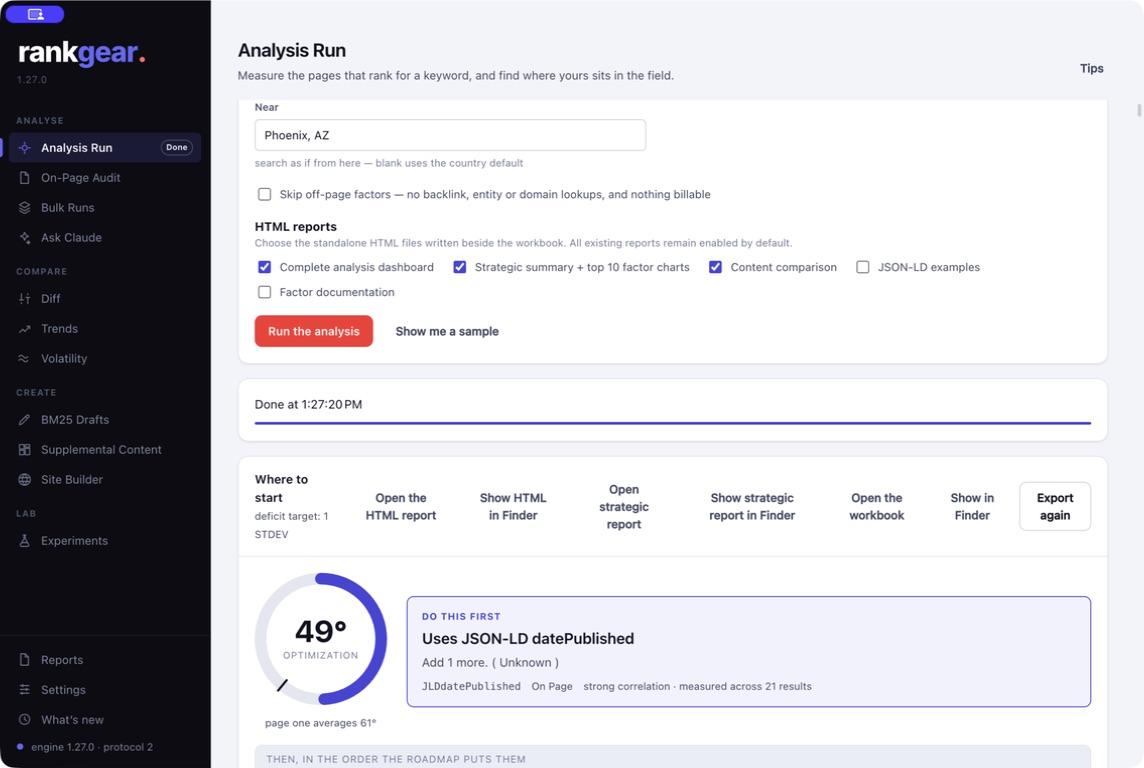
I have also learned that the best tools do not pretend to be a black box. They show you the math behind the score. That way you can sanity-check the output. If the tool says your highest priority is adding structured data to a page that gets zero traffic, you should be able to see why. Maybe it has high keyword difficulty but the topic has massive latent demand. Or maybe the tool is wrong, and you need to override it. Either way, transparency builds trust.
Real Data Sources You Can Connect
Most modern prioritization tools let you plug into your existing accounts. You connect Google Search Console to see which queries your pages already rank for but underperform. You connect Google Analytics to see which pages have the highest bounce rate or the best conversion rate. You connect Ahrefs or SEMrush to pull keyword difficulty and search volume. Some tools even let you import crawl data from Screaming Frog to factor in technical issues like duplicate content or missing canonical tags.
The value comes from the cross-referencing. A page might have a high search volume keyword, but if your click-through rate is low because your title tag is weak, that is a different fix than if the page has a slow load time that fails Core Web Vitals. A prioritization tool that can look at both signals at once will tell you whether to rewrite the title or optimize the images first.
Practical Examples of Prioritization in Action
Let me walk through a scenario I have seen play out multiple times. You run a content gap analysis and find that your competitor ranks for a term with 2,000 monthly searches and a keyword difficulty of 30. You also notice that a page on your site has a similar topic but ranks on page three. Your first instinct might be to write a new article targeting that keyword. But a prioritization tool might show you that the existing page already has a decent backlink profile and just needs a better XML sitemap entry and some internal links to climb. Writing a new article would take five hours. Updating the existing page would take one hour. The tool prioritizes the update because the effort is lower and the expected gain is similar.
Another example: you have a page that gets a lot of traffic but a terrible click-through rate from search results. Google Search Console shows the query has high impressions but low clicks. You check the page and see the title tag is generic. The tool might recommend a title rewrite over a full content overhaul because the effort is minimal and the click-through rate gain could be significant. Meanwhile, the same tool might deprioritize a task like adding Latent Semantic Indexing keywords to a page that already ranks number one. Why fix what is not broken?
Technical vs. Content Prioritization
I have found that most SEO work falls into two buckets: technical fixes and content improvements. A good prioritization tool handles both, but it should treat them differently. Technical issues like a broken canonical tag or a missing robots.txt directive often have a binary impact. They either work or they do not. Content improvements are more nuanced. You can spend hours on TF-IDF analysis and still not move the needle if the core topic does not match user intent.

When I use a prioritization tool, I usually set up two separate views. One for technical debt, where I rank issues by how many pages they affect and how hard they are to fix. Another for content opportunities, where I rank topics by search volume, keyword difficulty, and the strength of my existing content. The tool that lets me toggle between these views without losing context saves me a lot of mental overhead.
Common Pitfalls When Using These Tools
I have also seen teams misuse prioritization tools. The most common mistake is treating the output as gospel. No tool knows your business priorities. If your CEO just announced a partnership in the home goods space, you might want to prioritize content about home organization even if the tool says it is not the highest-ROI topic. The tool is a guide, not a dictator.
Another pitfall is data staleness. Search volume changes. Keyword difficulty fluctuates. Your backlink profile evolves. If you run a prioritization report once and never update it, you are making decisions on stale data. I recommend refreshing the data at least once a month, or more often if your site changes frequently. Some tools automate this, which is worth paying for.
Finally, do not ignore the small wins. A prioritization tool might rank a fix like adding structured data to your contact page as low priority because it has low search volume. But if that fix takes ten minutes and you have ten such pages, that is two hours of work that could improve your local SEO across the board. Sometimes the cumulative effect of many small fixes beats a single big project.
How RankGear Approaches Prioritization
RankGear is an SEO software that analyzes ranking factors for specific queries and provides actionable, evidence-based optimization plans. What I like about its approach is that it does not just give you a score. It shows you which specific ranking factors are hurting your page and how much each one matters for that particular query. That is a level of granularity that you do not get from a generic SEO prioritization tool that treats every keyword the same.
For example, if you are trying to rank for a competitive term, RankGear might tell you that your content length is adequate but your backlink profile is weak and your page speed fails Core Web Vitals. Instead of guessing where to start, you get a clear signal: fix the backlinks and the page speed first, in that order. That kind of specificity saves you from wasting time on changes that will not move the needle.
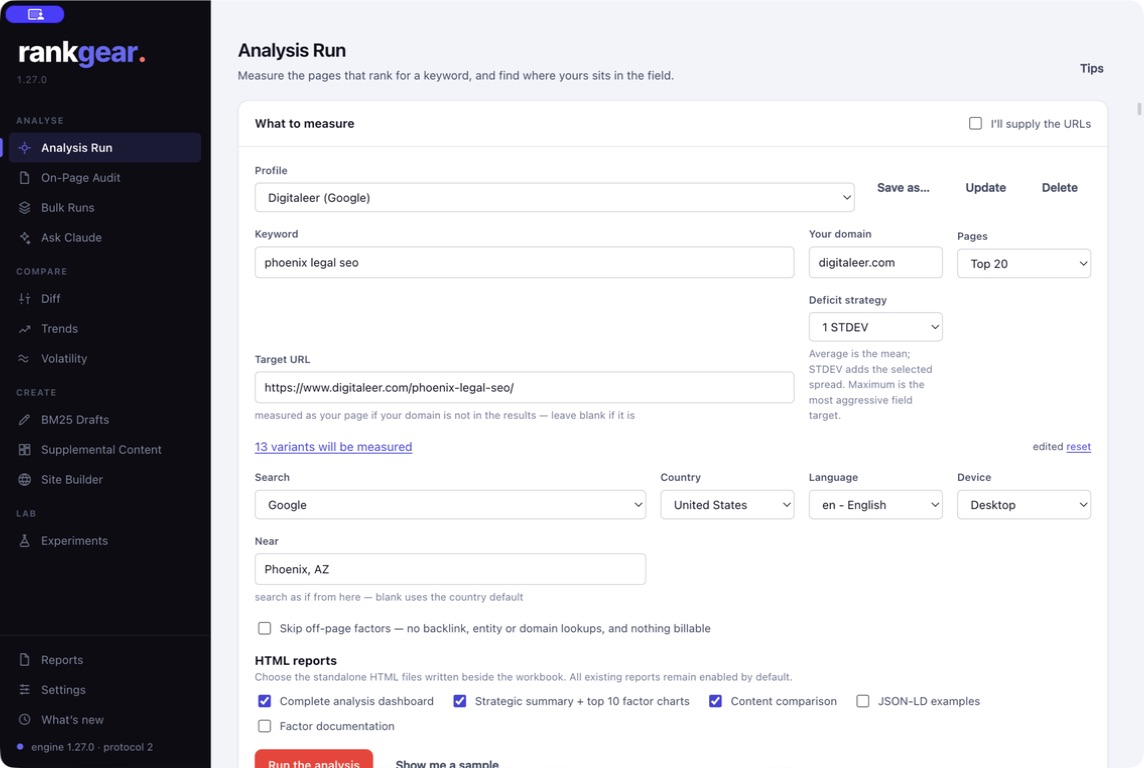
I have used it on a few client sites and the pattern is consistent. You run the analysis, get a ranked list of fixes, do the top three, and see movement within a few weeks. It is not magic. It is just good data applied with a clear framework for deciding what matters most.
Bringing It All Together
SEO has more data than ever, but data without prioritization is just noise. An SEO prioritization tool helps you cut through that noise by scoring tasks on impact and effort. Whether you connect it to Google Search Console, Ahrefs, SEMrush, Moz, or Screaming Frog, the goal is the same: surface the work that will actually improve your rankings and traffic. I have seen teams go from overwhelmed to focused just by adopting a single prioritization workflow. It is not a silver bullet, but it is one of the most practical investments you can make in your SEO process.